


Pamukkale is one of Türkiye’s most striking natural formations. From a distance, its brilliant white surfaces look like a snow-covered hillside or piles of cotton. Up close, they turn into a layered natural map that reveals the thousands-of-years-long journey of thermal water. Located in the Pamukkale district of Denizli, this natural site is listed as a UNESCO World Heritage Site together with the nearby ancient city of Hierapolis. The recognition of Pamukkale and Hierapolis as a “mixed heritage site” shows that the area is a unique whole that should be protected for both its natural formations and cultural heritage.
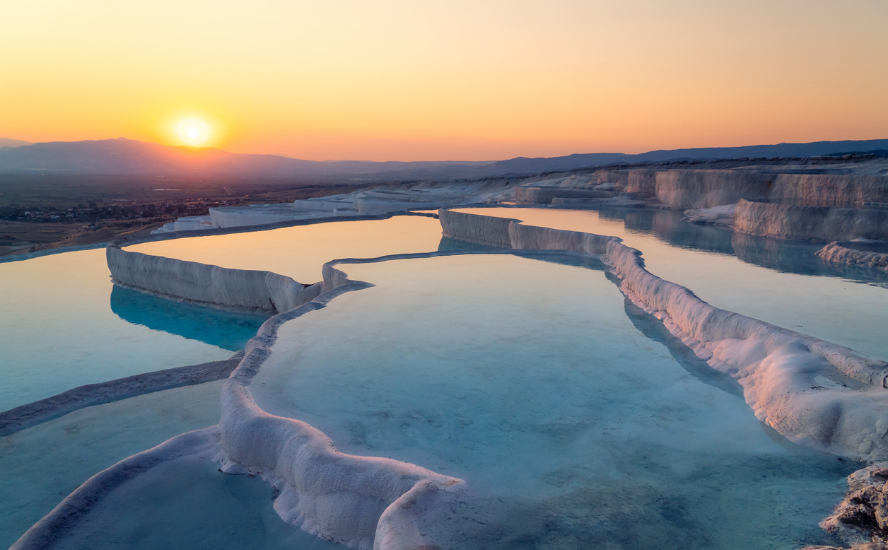
On one side are the terraced pools and white travertine formations created by calcium-rich hot springs along a slope approximately 200 meters high. On the other side is the ancient heritage of Hierapolis, dating back to the Greco-Roman and Byzantine periods. This combination makes Pamukkale much more than an impressive natural landscape. It is a unique destination where history, geology and the culture of thermal water come together.
The answer to the question “How were the Pamukkale travertines formed?” lies in the journey of these hot springs. The white surface that gives Pamukkale its “cotton-like” appearance is actually the result of a natural process that has continued for thousands of years.
Where Are the Pamukkale Travertines?
The Pamukkale travertines are located north of Denizli city center, on a slope overlooking the Çürüksu Plain. Together with its thermal springs, white travertine terraces and the ancient city of Hierapolis, the area is one of Türkiye’s best-known cultural and natural destinations. Since ancient times, Hierapolis has been considered a center for healing, purification and renewal thanks to its thermal waters. Its settlement developed around these thermal springs, strengthening the historical identity of Pamukkale. The same waters that people visited thousands of years ago in search of well-being, relaxation and healing continue to be one of the region’s most distinctive features today.
The reason Pamukkale remains so unique today is the combination of thermal springs that have been associated with healing for thousands of years with a remarkable natural formation and a rich historical heritage. On one side are the white terraces shaped by water; on the other is Hierapolis, which has been considered sacred and healing since ancient times. This combination makes Pamukkale a multi-layered destination where geology, ancient history and the tradition of thermal waters come together.
How Were the Pamukkale Travertines Formed?
Travertine is a type of rock formed when calcium carbonate-rich water reaches the surface and deposits minerals over time. In Pamukkale, this process begins when hot, mineral-rich water rises from underground and continues as it flows down the terraced slope. When the thermal water reaches the surface and comes into contact with the air, carbon dioxide escapes from the water. Calcium carbonate then precipitates and gradually accumulates on the surface in white layers. In short, behind the spectacular appearance of the Pamukkale travertines is a natural chemical process shaped by water, minerals and time.
Although this process may seem simple at first, it took hundreds of thousands of years for the travertines to develop their current appearance. Layer formation in the region has been continuing for approximately 400,000 years and remains an active natural process today. Factors such as the direction and temperature of the water flow, mineral concentration, slope, evaporation rate and the way the water comes into contact with the surface all influence this process.
Why Are the Pamukkale Travertines White?
The white color of the Pamukkale travertines comes from the calcium carbonate deposits left behind by the thermal water. When the water reaches the surface and comes into contact with the air, the minerals it contains begin to precipitate. Initially forming as a soft layer, this mineral structure gradually hardens and creates the white texture of the travertine surface. Fresh calcium carbonate deposits give the formations their bright white appearance.
This whiteness is also the main reason Pamukkale is known as the “White Paradise.” However, the color and structure of the travertines depend on a delicate balance. Controlled water flow to the appropriate areas, protection of the surface and limiting visitor contact are essential for preserving this natural structure.
Features of the Pamukkale Travertines
The Pamukkale travertines create a unique landscape with their white mineral-like texture, petrified waterfall formations and terraced pools. Their layered structure, bright white color and ongoing geological formation strengthen both the visual and natural heritage value of the region.
They were formed by thermal waters rich in calcium carbonate.
Their white appearance comes from mineral deposits.
They are shaped by stepped pools, terraces and traces of petrified water flows.
The formation process continues today through controlled water flow.
Together with the ancient city of Hierapolis, they form a natural and cultural heritage site.
Their delicate surface makes them a unique geological structure that must be protected.
These characteristics make Pamukkale more than a natural attraction to visit. It is a living formation that continues to develop and needs to be protected. The travertine surfaces are shaped by the combined work of water, minerals, slope and time.
The Ancient City of Hierapolis and the Tradition of Thermal Water
One of the elements that makes the Pamukkale travertines special is the ancient city of Hierapolis, located right next to them. In ancient times, the thermal waters of the region were considered valuable for healing, purification, relaxation and social life. For this reason, Hierapolis developed around the hot springs, combining the natural beauty of Pamukkale with a rich historical background.
The ancient city is home to many remarkable structures, including a Roman theater, a large necropolis, bath ruins, an ancient pool, an agora and sacred sites. These structures show that Hierapolis was more than simply a settlement. It was an important ancient center where health, religion, social life and public experiences came together.
For this reason, the travertines should not be considered separately when planning a visit to Pamukkale. Exploring the ancient texture of Hierapolis and understanding the region’s thousands-of-years-old relationship with thermal water are just as important as seeing the white terraces. Experiencing the white travertines and ancient ruins together transforms a visit from a purely visual discovery into an opportunity to better understand the region’s historical relationship with water.
Things to Consider When Visiting Pamukkale
Since the Pamukkale travertines are a delicate natural formation, there are several things to keep in mind when visiting the site. To protect the travertines, walking may be restricted in certain areas, while water flow can increase, decrease or be redirected to different areas depending on the conditions. Managing visitor movement in certain areas and maintaining the natural water balance are essential for protecting the white travertine formations.
To make your visit to Pamukkale more comfortable and enjoyable, consider the following:
Walk only through the designated areas and use the permitted entrances to the travertines.
Follow the signs and directions in the area to avoid damaging the surface.
Considering the strong reflection of the white travertines, choose early morning or times close to sunset for photography.
Plan your visit to the travertines together with the ancient city of Hierapolis and allow enough time for both.
Consider the thermal baths, spas and hotel facilities in the area to further enjoy the region’s thermal water experience.
Take extra care with sun protection and water consumption during the summer months.
Rather than planning a short visit, take your time to explore the area and consider including accommodation in your itinerary.
Pamukkale offers much more than a place to see and leave quickly. Experiencing the formation of the travertines, the history of Hierapolis and the region’s thermal water culture together makes the visit more meaningful.
A Thermal Holiday Near the Travertines at Richmond Pamukkale Thermal
For those who want to explore the Pamukkale travertines, choosing the right accommodation can directly shape the pace of the experience. After exploring the region’s natural and historical landscape, relaxing in thermal waters can transform the trip from a simple sightseeing plan into a rejuvenating getaway.
Richmond Pamukkale Thermal is located in the Karahayıt area, close to this historical and natural heritage. Approximately 3 km from the Pamukkale travertines, the hotel offers a comfortable base for those who want to explore the region at a relaxed pace, with its garden surrounded by pine trees, thermal water facilities, spa areas and proximity to important sites such as Hierapolis and Laodicea.
The red thermal waters of Karahayıt, which are rich in iron minerals, have a different thermal character from the calcium carbonate-rich waters that formed the white travertines of Pamukkale. This makes the accommodation experience an opportunity to discover another aspect of the region’s relationship with water. Richmond Pamukkale Thermal’s indoor and outdoor thermal pools, Turkish bath, sauna, steam room and spa facilities combine the natural richness of thermal waters with modern comfort, allowing the pace of the day’s exploration to shift into a more relaxing rhythm.
Experiencing the formation of the travertines, the ancient atmosphere of Hierapolis and the thermal character of Karahayıt along the same route makes a trip to Pamukkale a more layered experience. Staying at Richmond Pamukkale Thermal transforms this experience from a simple list of places to visit into a more comfortable holiday where nature, history and thermal relaxation complement one another.
