


Exploring the Ancient City of Ephesus requires much more than just a short walking route. Located in the Selçuk district of İzmir, this expansive archaeological site is a rich cultural journey that should be planned along with its wide marble streets, an ancient theater still actively used today, a grand library facade, aesthetically breathtaking terrace houses, and surrounding cultural stops. Therefore, the answer to the question "How long does it take to tour the Ancient City of Ephesus?" depends on how thoroughly you wish to explore it.
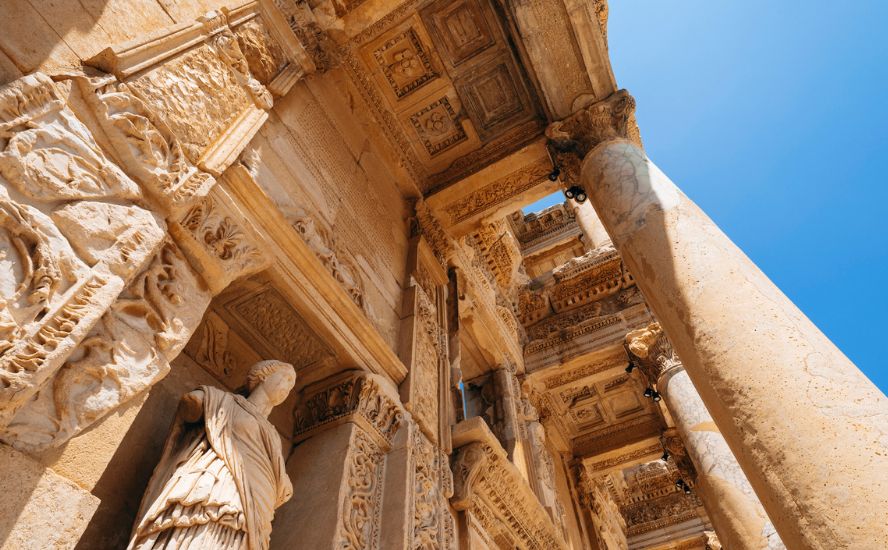
For those who want a quick overview of Ephesus, a 1.5 to 2-hour walk may suffice. However, if you want to properly absorb the ancient city, take photos, read the history of the structures, visit the Terrace Houses, and include nearby attractions in your program, it is better to set aside at least half a day. Especially during the summer months, the heat, crowds, and walking distance directly impact the duration of your visit. For this reason, it is advisable to keep your schedule flexible when creating an itinerary for the Ancient City of Ephesus.
What Is the Ideal Duration for Visiting the Ancient City of Ephesus?
The ideal visiting time for the Ancient City of Ephesus can be considered around 2.5 to 3 hours on average. This duration is sufficient to walk the main route at an unhurried pace, spend time in front of the Library of Celsus, marvel at the giant Great Theatre, stroll down Curetes Street, and soak in the overall atmosphere of the ancient city. Photo breaks, brief rests in shaded areas, and reading the informational signs along the way can easily fit into this timeframe.
If you are planning a more comprehensive tour, this period can extend up to 4 hours and, in some cases, can even be filled with various activities spanning a full day. If you plan to visit ticketed areas such as the Terrace Houses and the Ephesus Experience Museum, you should add about 1.5 to 2 hours to the standard tour time. Furthermore, if you wish to see other nearby attractions in the same region—such as the House of the Virgin Mary, the Temple of Artemis, the Ephesus Museum, or the Ayasuluk Citadel—setting aside a full day would make for a much more comfortable trip.
The most crucial detail to keep in mind here is not to measure the visit solely by time. Because Ephesus is exceptionally rich in landmarks, it is possible to walk quickly past some structures, yet the true impact of the city often reveals itself in the moments you stop and take it all in. Although this extends the duration of your tour, it makes the overall experience far more impressive.
Must-See Attractions in the Ancient City of Ephesus
The walking route through the Ancient City of Ephesus is generally shaped by which of the two entrance gates you choose. While visitors starting from the Upper Gate follow a more comfortable downhill route, the most frequently preferred gate starts from the slightly sloped lower section.
The Upper Gate: Located near the House of the Virgin Mary, this entrance begins at the city's administrative section—including the Odeon, State Agora, and Temple of Domitian—and leads downhill to the Library of Celsus.
The Lower Gate: Situated close to Selçuk's town center and surrounded by various commercial establishments, this entrance starts in the exact opposite direction.
Both routes are suitable for visiting Ephesus's most renowned structures. In general, the main highlights you should not miss before leaving Ephesus include:
Library of Celsus: One of Ephesus's most iconic monuments. Serving as both a tomb and a library, it was a pioneer in its architectural class. Its magnificent facade is among the most photographed spots in the ancient city.
Great Theatre: With a seating capacity of approximately 25,000, this well-preserved, impressive structure brings the social and cultural life of antiquity into the modern day.
Curetes Street (Kuretler Caddesi): As one of the city's main thoroughfares, walking along this street offers views of numerous ruins, fountain structures, and key architectural details.
Temple of Hadrian: One of the most eye-catching structures during an Ephesus tour and one of the city's most aesthetic masterpieces. With its relief carvings of Medusa and prime location, it is a key stop along Curetes Street.
Terrace Houses (Yamaç Evler): A specialized section offering detailed insight into the daily lives of Ephesus's elite families. With its well-preserved mosaics, frescoes, and residential layouts, it provides a deep look into the ancient social structure.
Harbor Street (Antik Liman Caddesi): An important walking axis for understanding the city's rich maritime trade and demographic layout.
While it is possible to reserve 2.5 to 3 hours on the main route to see all these points, the duration will extend if you include the Terrace Houses in your itinerary. If you have an interest in history and archaeology, skipping this section is not recommended.
How Should You Plan Your Ephesus Itinerary?
The first decision you need to make when preparing an itinerary for the Ancient City of Ephesus is which entrance gate to use. During the summer months, starting at the Upper Gate and walking downward can be much more comfortable, as most of the walk is downhill and less exhausting. While starting from the Lower Gate allows you to see the most aesthetic structures first, intense heat can make this uphill route less enjoyable.
Regardless of which gate you choose, opting for early morning hours or cooler late afternoon times is ideal for a comfortable visit. As the sun peaks around midday, walking through the ancient city becomes quite challenging. You can spend these hotter hours taking breaks in shaded areas, resting at cafes, or exploring indoor museum sections. Additionally, never forget to bring a hat, sunglasses, comfortable walking shoes, and water.
Consider the following recommendations for an ideal Ephesus itinerary:
Walk along the main street first to grasp the city's general layout.
Set aside extra time to inspect and take photos around the Library of Celsus.
Take a short rest break at the Great Theatre.
Spend the hottest hours of the day inside the Ephesus Experience Museum or the shaded Terrace Houses.
If you have time after exiting, head over to the Temple of Artemis.
Next, go down to the town center to explore the Ephesus Museum.
Conclude your day by discovering Selçuk's local culinary flavors.
This sequence creates an easily navigable route, especially for first-time visitors. If you prefer a guided tour, listening to the history of the structures in their proper context can make the trip even more meaningful. When exploring on your own, obtaining a map at the entrance or doing a brief reading beforehand is highly recommended.
How to Visit the Ancient City of Ephesus in Summer?
Because Ephesus is an open-air archaeological site, seasonal conditions significantly influence the visiting experience. The area can get extremely hot during the summer months. Therefore, if you are visiting the Ancient City of Ephesus in summer, early morning hours or late afternoon are much better choices. Going early in the morning means fewer crowds and a smoother walking pace. A late afternoon visit—especially if combined with night illumination—offers a deeper and more evocative experience, though the streets can get quite crowded compared to earlier in the day.
Key tips to keep in mind for a summer visit to the Ancient City of Ephesus include:
Wear comfortable walking shoes.
Keep water with you at all times.
Use a hat, sunscreen, and an umbrella for shade.
Rest in shaded or indoor areas during midday hours.
Take advantage of early morning or late afternoon light for photos.
Avoid rushing your schedule if you plan to dedicate time to additional stops like the Terrace Houses and museums.
Ephesus's stone pathways and expansive layout can make a route that seems short on paper much more tiring than expected. Therefore, when calculating your visiting time, consider factors like temperature and the need for rest breaks, rather than focusing solely on the physical distance on a map.
What Else Can Be Seen on the Same Day as an Ephesus Tour?
There are many surrounding destinations around the Ancient City of Ephesus that can be added to the same day, turning the excursion into a full, immersive cultural trip. Following your tour of the ancient city, you can incorporate surrounding sites such as the Temple of Artemis, the Ephesus Museum, the House of the Virgin Mary, or the village of Şirince into your program. Seeing nearby spots like the Cave of the Seven Sleepers or the Ayasuluk Citadel in central Selçuk further enriches the route. However, squeezing all of them into a single day may not be suitable for everyone.
For a more balanced plan, you can schedule the Ancient City of Ephesus and its immediate grounds for the morning, and nearby central stops like the Ephesus Museum or the Temple of Artemis for the afternoon. If you also want to add Şirince and Ayasuluk to your schedule, late afternoon hours are much more enjoyable. As for the House of the Virgin Mary, its separate location requires a dedicated route, so travel time should be factored in accordingly.
For shorter visits, combining the Ancient City of Ephesus, the Temple of Artemis, and the Ephesus Museum creates a thoroughly satisfying experience. On a broader day plan, you can add the House of the Virgin Mary, Ayasuluk Citadel, and Şirince to this route. If you want to include a beach break, heading to the nearby beaches of Kuşadası after exploring the city offers a wonderfully relaxing end to the day.
The Advantage of Staying at Richmond Ephesus Resort for Your Ephesus Trip
To explore the Ancient City of Ephesus at an unhurried pace, your choice of accommodation can directly shape your travel experience. Although day trips to the region are possible, combining long journeys, hot weather, and strenuous walking routes into a single day can detract from the enjoyment—especially in summer. Stopping at a comfortable location close to Ephesus is a fantastic option to truly savor your cultural journey.
Standing out with its proximity to the Ancient City of Ephesus, Pamucak Beach, Selçuk town center, and surrounding regions, Richmond Ephesus Resort seamlessly blends a cultural getaway with a seaside vacation. Exploring Ephesus in the morning hours and spending the rest of the day relaxing at the hotel, taking a pool or beach break, and enjoying rich resort amenities provides a far more comfortable itinerary. This transforms a summer trip to Ephesus from a rushed stopover into a relaxing, memorable Aegean vacation.
While the answer to "How long does it take to tour the Ancient City of Ephesus?" varies depending on the scope of your itinerary, a well-planned 3-hour visit is sufficient for most travelers. If you want to see even more, visit nearby cultural landmarks, and end your day fully rested, staying at Richmond Ephesus Resort comfortably eases the pace of your holiday.
