


When exploring the ancient city of Ephesus, landmarks such as the Library of Celsus, the Great Theatre, and Curetes Street reveal the city's impressive public life. The Terrace Houses, however, offer a fascinating glimpse into the luxurious private lives of its wealthy residents. Built on terraces along the slopes of Mount Bülbül overlooking Curetes Street, these residences once belonged to some of Ephesus's most affluent citizens. Their interiors featured elaborate mosaic floors, colorful frescoes, marble surfaces, and sophisticated heating systems.
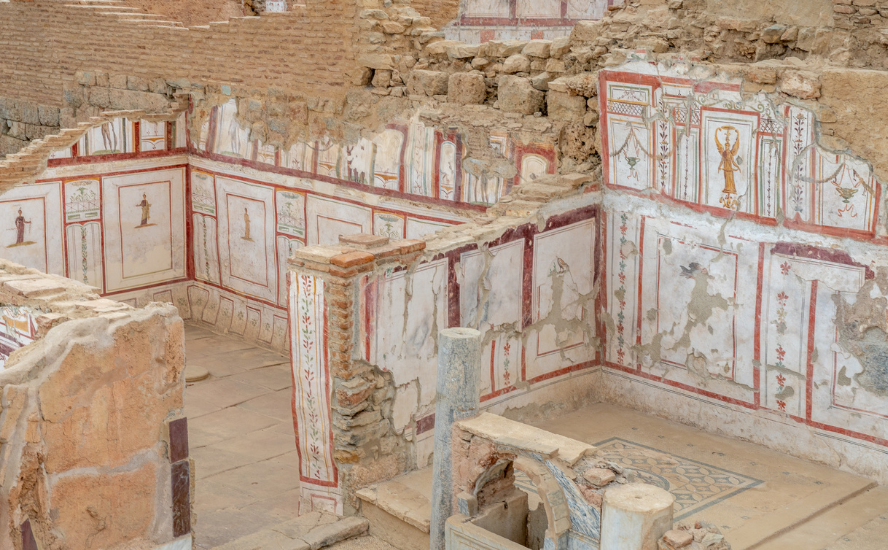
Today, Terrace House 2, which is open to visitors, covers approximately 4,000 square meters and consists of seven residential units arranged across three terraces. As you walk through the site beneath its protective roof, elevated pathways allow you to look down into the living spaces once occupied by the city's elite. In some rooms, you can still admire colors and decorative details preserved for nearly two thousand years, along with subtle traces of everyday life. What makes the Terrace Houses of Ephesus truly remarkable is their ability to reveal how the city's wealthiest residents lived, offering a more intimate perspective alongside the monumental architecture of the Roman world.
What Is the History of the Terrace Houses in Ephesus?
Before the construction of the Terrace Houses, the area had been used for various purposes during earlier periods. The first phase of residential construction dates back to the 1st century AD. Over the following centuries, the buildings were expanded, rooms were adapted for different functions, and interiors were redecorated several times according to the changing needs and preferences of their owners. As a result, the houses visible today do not represent a single fixed moment in history but rather a residential complex that evolved over generations.
Terrace House 2, in particular, is one of the best-preserved examples of elite residential architecture from the Roman Imperial period. Following earthquakes in the 3rd century AD, significant sections of the houses suffered extensive damage. In later periods, parts of the area continued to be used for different purposes. The surviving architectural features and decorative elements reveal different layers of this remarkable history, spanning approximately two thousand years.
Who Lived in the Terrace Houses of Ephesus?
The Terrace Houses were home to some of Ephesus's wealthiest and most influential families. Spacious reception halls, marble wall coverings, private bathing facilities, intricate mosaics, and elaborate wall paintings demonstrate that these residences offered a standard of living far beyond that of ordinary urban homes.
Inscriptions, graffiti, and archaeological discoveries have also provided more specific clues about the people who lived here. For example, one of the residences in Terrace House 2 is believed to have been associated with Gaius Vibius Salutaris, a wealthy and influential figure in ancient Ephesus. The impressive reception areas suggest that these homes were not simply private family residences but also important spaces for entertaining guests, maintaining social relationships, and displaying status and wealth.
How Were the Terrace Houses Discovered?
Systematic archaeological investigations of the Terrace Houses intensified during the second half of the 20th century. Excavations at Terrace House 2 began in the 1960s, and decades of archaeological work gradually uncovered the residential units, individual rooms, and successive layers of interior decoration.
As the importance of preserving the mosaics and frescoes in their original locations became clear, a large protective structure was designed for the site. Constructed between 1999 and 2000, the modern roof helps protect the remains from environmental factors such as rain and direct sunlight while allowing excavation and conservation work to continue.
Today, visitors can explore the different levels and rooms from elevated walkways without damaging the archaeological remains, while conservation specialists continue their restoration efforts.
What Are the Architectural Features of the Terrace Houses in Ephesus?
The Terrace Houses were designed as a series of stepped residential structures adapted to the sloping terrain of Mount Bülbül. Terrace House 2, which is currently open to visitors, occupies a substantial urban block within the ancient city of Ephesus. Covering approximately 4,000 square meters across three terraces, the complex consists of seven residential units.
Most of the houses were multi-story residences built around peristyle courtyards. These central open spaces, surrounded by columns, were bordered by reception halls, dining rooms, private chambers, and service areas. The courtyards provided natural light and ventilation while serving as the main circulation areas connecting different parts of the homes.
The size and layout of the residences varied considerably. Some houses included multiple floors, elaborate reception rooms, dining areas, service quarters, and private bathing facilities. Rather than a simple collection of neighboring houses, the Terrace Houses formed a sophisticated, multi-level residential complex carefully integrated into the hillside.
Over time, individual properties were divided, combined, or redesigned to accommodate changing household needs. These modifications reveal how Roman residential architecture evolved across several generations.
Mosaics and Wall Frescoes
Among the most striking features of the Terrace Houses are their beautifully preserved floor mosaics and wall paintings. Visitors can admire a wide range of artistic designs, from geometric patterns to elaborate figurative compositions. Some rooms feature mythological characters, deities, and scenes inspired by nature, while others display more restrained decorative arrangements.
Many of the original colors used in the wall paintings remain visible today. Evidence of walls being repainted during different periods suggests that homeowners regularly updated their interiors to reflect changing artistic tastes.
Small inscriptions and graffiti scratched into the walls add a particularly personal dimension to the luxurious surroundings, offering unexpected glimpses into the daily lives of the people who once inhabited these spaces.
Courtyards, Rooms, and Everyday Living Spaces
The peristyle courtyards at the center of the residences helped organize movement throughout the houses while providing light and ventilation to the surrounding rooms. Elaborately decorated reception areas, dining rooms, and more private living quarters were arranged around these central spaces. Kitchens and service areas were generally positioned in the more functional sections of the homes.
Archaeological discoveries have helped researchers understand how these spaces were used. Tableware, sculptures, furniture fragments, and personal belongings provide valuable insights into everyday activities within rooms adorned with marble and mosaics.
These findings bring the houses to life, revealing the connection between their impressive architectural decoration and the practical routines of their former residents.
Ancient Heating and Water Systems
One of the clearest indications of the comfort enjoyed by the residents of the Terrace Houses is their advanced heating and water infrastructure. Certain rooms were equipped with a hypocaust system, which circulated heated air beneath the floors. This technology made it possible to warm private bathing areas and selected rooms.
Water was supplied to fountains, pools, and domestic facilities through networks of pipes and channels. Some residences also had direct connections to water supply and drainage systems, demonstrating how the sophisticated urban infrastructure of ancient Ephesus extended into private homes.
Why Are the Terrace Houses of Ephesus Important?
The monumental public buildings of Ephesus provide valuable insights into the political, commercial, religious, and entertainment activities of a Roman city. The Terrace Houses complete this picture by revealing what life was like behind closed doors.
The size of the rooms, the quality of construction materials, decorative choices, and technical facilities offer a remarkably detailed understanding of everyday life among the wealthy residents of Roman Ephesus.
Another important feature of the site is that many of its mosaics and frescoes have been preserved in their original architectural settings. Rather than viewing isolated artifacts in museum display cases, visitors can experience how art, architecture, and daily life came together within the same residential environment.
What Should You Know Before Visiting the Terrace Houses?
Although the Terrace Houses are located within the Ephesus Archaeological Site, they require a separate admission ticket. As of October 2026, the MuseumPass Türkiye (MüzeKart) does not provide free admission to this area. Turkish citizens holding a MüzeKart can purchase a discounted ticket for TRY 200, while the admission fee for international visitors is €15. As ticket prices and opening hours may change, checking the latest visitor information before your trip is recommended.
Since much of the complex is covered by a protective roof, visiting the Terrace Houses can offer a more shaded experience than exploring the open-air sections of Ephesus during summer. However, the visitor route includes stairs and elevated walkways, so comfortable footwear is advisable.
Allowing approximately 45 minutes to one hour is generally sufficient for a visit. If you would like to examine the mosaics, frescoes, and architectural layouts in greater detail, consider setting aside additional time.
Where to Stay When Visiting Ephesus
If you are planning to explore Ephesus in detail, staying in or around Selçuk and Pamucak can make your itinerary considerably more convenient. Accommodation in this area allows you to reach the ancient city early in the morning and explore many of its major attractions, including the Terrace Houses, before temperatures and visitor numbers increase around midday.
Located in Pamucak, Richmond Ephesus Resort is approximately 15 minutes from the ancient city of Ephesus, making it a convenient accommodation option for a cultural getaway. Other important attractions, such as the Temple of Artemis and the House of the Virgin Mary, are also within easy reach, allowing visitors to organize several days of historical exploration from a single base.
After a long day of walking through the ancient city, returning to Pamucak Beach offers a pleasant change of pace. With its natural sandy beach, indoor and outdoor swimming pools, spacious gardens, and variety of recreational facilities, Richmond Ephesus Resort provides opportunities to balance cultural discoveries with relaxation.
You can dedicate one day to exploring Ephesus and spend the following day enjoying a slower pace at the resort or discovering other attractions around Selçuk. This approach allows you to experience the Terrace Houses, Ephesus Museum, and the region's other historical landmarks without having to fit everything into a single day.


The earliest construction phase of the Terrace Houses dates back to the 1st century AD, meaning the residences have a history of approximately 2,000 years. Various additions, renovations, and architectural modifications were made over the following centuries.
The Terrace Houses were occupied by wealthy and influential families of ancient Ephesus. Their spacious interiors, marble decorations, intricate mosaics, colorful frescoes, and sophisticated infrastructure indicate that the residents enjoyed a high social standing and a luxurious lifestyle.
Visitors can explore beautifully preserved floor mosaics, colorful wall frescoes, marble surfaces, peristyle courtyards, fountains, living spaces, and traces of ancient heating systems. Graffiti preserved on the walls also offers more personal insights into everyday life during the Roman period.
As of October 2026, Turkish citizens with a MüzeKart can purchase a discounted admission ticket for TRY 200. The entrance fee for international visitors is €15. Admission to the Terrace Houses is charged separately from the main Ephesus Archaeological Site, and prices may change over time.
The modern protective structure covering Terrace House 2 was constructed between 1999 and 2000. The site opened to the public in its current visitor-friendly arrangement in 2006. Since then, visitors have been able to explore the ancient residences from elevated walkways designed to protect the archaeological remains.
The Terrace Houses are located within the ancient city of Ephesus in the Selçuk district of İzmir, on the slopes of Mount Bülbül. They occupy a series of terraces overlooking Curetes Street, opposite the Temple of Hadrian.
