


With its striking white travertines, ancient cities and thermal springs, Pamukkale is one of the most visited destinations in Denizli. As the region offers much more than a day trip, staying for a few days allows you to explore its historical and natural attractions at a more leisurely pace while also making time for its thermal experiences. At this point, the answer to the question “Where to stay in Pamukkale?” may vary depending on what you expect from your holiday.
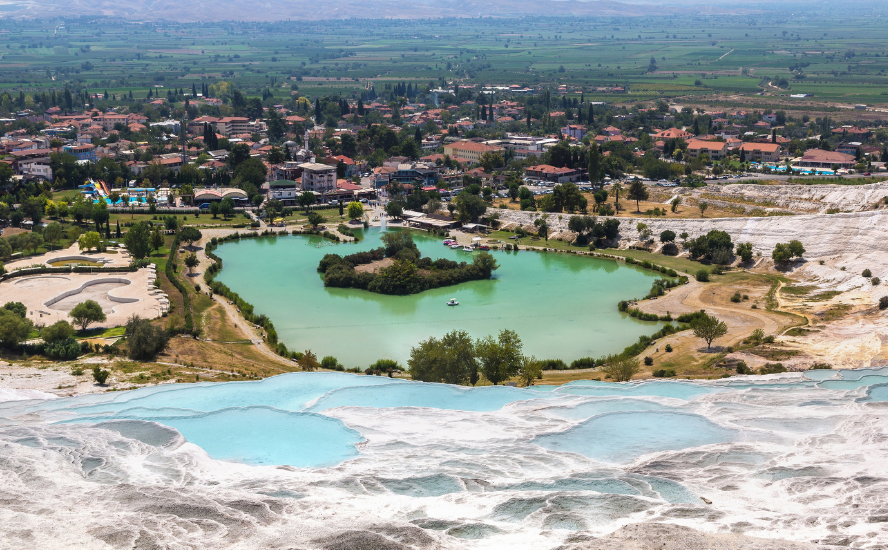
Accommodation options in Pamukkale are mainly concentrated around Pamukkale Centre, Karahayıt and Denizli City Centre. Those who want to stay close to the travertines, travellers prioritising a thermal hotel experience, and guests who prefer the amenities of the city centre may choose different areas. For this reason, it is important to consider both your travel itinerary and the type of experience you expect from your accommodation before making a hotel reservation.
Which Areas Are Best for Staying in Pamukkale?
Each of the main accommodation areas in Pamukkale caters to a different type of travel experience. While being close to the travertines can be particularly important for short cultural trips, Karahayıt may be a better choice for holidays focused on relaxation and thermal experiences. Those who want to stay close to city life and transport connections may find Denizli City Centre more convenient.
Pamukkale Centre
Pamukkale Centre is a practical choice for travellers who want to make the travertines and the ancient city of Hierapolis the focus of their trip. Especially for shorter stays, being close to the archaeological site makes it easier to start the day early. The area offers a variety of accommodation options, from boutique hotels to guesthouses. It is a convenient starting point for those who plan to spend most of their holiday exploring the surrounding attractions.
Karahayıt
Located very close to Pamukkale, Karahayıt stands out particularly for its thermal and spa facilities. One of the area's most distinctive features is its thermal water, which has red and brown tones due to its mineral content.
The concentration of thermal hotels in Karahayıt makes the area an attractive option for travellers who want to combine cultural exploration with relaxation. You can spend the day discovering the travertines and ancient cities, then unwind in a thermal pool, spa or relaxation area. Richmond Pamukkale Thermal also stands out in Karahayıt thanks to its convenient location, approximately 3 km from Pamukkale.
Denizli City Centre
Denizli City Centre can be considered by those who prefer to stay close to urban amenities. The abundance of restaurants, cafés, shopping opportunities and public transport options can be particularly convenient for travellers combining a business trip with a cultural visit.
However, if Hierapolis is the main focus of your trip, you will need to plan transportation to the travertines separately each day. For this reason, Pamukkale and Karahayıt may offer greater convenience than Denizli City Centre for shorter sightseeing trips.
What Should You Consider When Choosing a Hotel in Pamukkale?
When choosing among Pamukkale hotels, looking only at the room rate is not enough. The hotel's distance from the travertines, thermal and spa facilities, and on-site services can all have a direct impact on the overall comfort of your stay. Especially during short holidays, time spent travelling can require adjustments to your sightseeing itinerary.
Located in Karahayıt, Richmond Pamukkale Thermal offers the advantage of being approximately 3 km from the Pamukkale Travertines, bringing together a cultural and thermal holiday experience. Its proximity to historical sites, peaceful setting surrounded by pine trees and extensive thermal facilities allow you to make relaxation part of your stay while exploring the region during the day.
Proximity to the Pamukkale Travertines
If visiting the travertines, Hierapolis and the surrounding historical sites is the main purpose of your trip, the location of your hotel becomes an important consideration. Staying nearby can make it easier to start the day early and, particularly during the warmer months, avoid the busiest hours around midday. If you are not travelling by car, it is also useful to check the hotel's transportation options before making your reservation.
Thermal and Spa Facilities
One of the features that makes staying in Pamukkale unique is the availability of thermal experiences. If you plan to stay for several days, it is worth exploring the thermal and spa facilities offered by your hotel. Richmond Pamukkale Thermal features indoor and outdoor thermal pools, a sauna, steam room, Turkish bath and spa treatments, offering a more comprehensive experience for guests who want to make time to relax after a day of sightseeing.
Hotel Location and Transportation Options
The area around Pamukkale is home to more than just the travertines. Other historical destinations, including Hierapolis and Laodicea, are also part of the region's attractions. For this reason, the location of your hotel should be considered in relation to your overall itinerary rather than simply its distance from a single attraction. If you are travelling without a private vehicle, planning how you will reach the surrounding attractions in advance can help you make the most of your holiday.
Hotel Facilities and Comfort
Walking around the travertines and exploring the ancient cities can be tiring after a full day of sightseeing. After a busy day, comfortable accommodation, dining options, outdoor spaces and opportunities to relax become increasingly important. If you are travelling with children, it is also worth checking whether the hotel offers family-friendly areas and activities.
With its spacious outdoor areas surrounded by nature, thermal centre, variety of rooms and suites, and dining venues catering to different tastes, Richmond Pamukkale Thermal makes the accommodation experience an integral part of the holiday.
What Types of Accommodation Are Available in Pamukkale?
Pamukkale offers a variety of accommodation options to suit different travel styles and budgets. Considering how much time you plan to spend at the hotel and whether your trip is more focused on cultural exploration or relaxation can help you make the right choice.
Thermal Hotels
Particularly concentrated around Karahayıt, thermal hotels offer facilities such as thermal pools, spas and relaxation areas, making the hotel experience an important part of the overall trip.
Boutique Hotels
Travellers looking for a smaller-scale and more peaceful stay may prefer boutique hotels. Particularly around Pamukkale Centre, there are various boutique accommodation options close to the main attractions.
City Hotels
City hotels are mainly located in Denizli City Centre. They are suitable for travellers who want to combine a business trip with a visit to Pamukkale or prefer to stay close to the amenities of the city.
Guesthouses and Apartments
Guesthouses and apartments can be suitable for travellers looking for a more independent and budget-friendly stay. They can be particularly practical for those who plan to spend most of their time exploring the region rather than at the hotel.
How Should You Choose a Hotel for Your Pamukkale Holiday?
When choosing a hotel in Pamukkale, it is important to first determine the length of your stay and what you expect from your trip. For a short one-night visit, proximity to the travertines may be more important, while thermal and spa facilities can make a longer stay more balanced and enjoyable.
The following questions can help guide your decision:
How important is it for you to stay close to the travertines?
Would you like to make use of thermal pools and spa facilities?
Do you plan to visit ancient cities and attractions beyond Pamukkale?
Will you be travelling by private car or using other transportation options?
Will you primarily use the hotel as a place to stay, or would you also like to make time for relaxation and thermal experiences?
For travellers looking to combine history, nature and thermal relaxation in a single holiday, Karahayıt offers a well-balanced experience. With its proximity to Pamukkale and extensive thermal and spa facilities, Richmond Pamukkale Thermal can be considered by those who want to make time for relaxation while exploring the region and combine different purposes of travel, from business and wellness to leisure.
Frequently Asked Questions
What is the best time to visit Pamukkale?
Pamukkale can be visited throughout the year, but spring and autumn generally offer milder conditions for those planning longer walks outdoors. During the summer months, visiting the travertines early in the morning or in the late afternoon can provide a more comfortable experience.
What is Pamukkale famous for?
Pamukkale is best known for its white travertines and the ancient city of Hierapolis located alongside them. The red thermal waters of Karahayıt and ancient cities such as Laodicea are also among the region's notable attractions.
How many hours do you need to visit Pamukkale?
Allowing approximately 3–4 hours is generally suitable for exploring the travertines and the ancient city of Hierapolis at a comfortable pace. If you would like to explore the area in greater detail or include additional attractions in your itinerary, you may wish to set aside half a day.
Where can I find hotels near the Pamukkale Travertines?
Accommodation options close to the travertines can be found around Pamukkale Centre and Karahayıt. Pamukkale Centre stands out for its proximity to the main attractions, while Karahayıt is known for its thermal hotel options.
How many days should you stay in Pamukkale?
If you only plan to visit the travertines and Hierapolis, a one-day itinerary may be sufficient. If you would also like to enjoy a thermal experience, visit Laodicea and explore other attractions in the surrounding area, a 2–3 day stay can provide a more relaxed itinerary.
What is the best season to stay in Pamukkale?
Spring and autumn are among the most suitable seasons for cultural and nature-focused trips. During winter, the thermal hotel experience becomes particularly appealing, while in summer it is important to plan sightseeing hours around the warmer parts of the day.
